
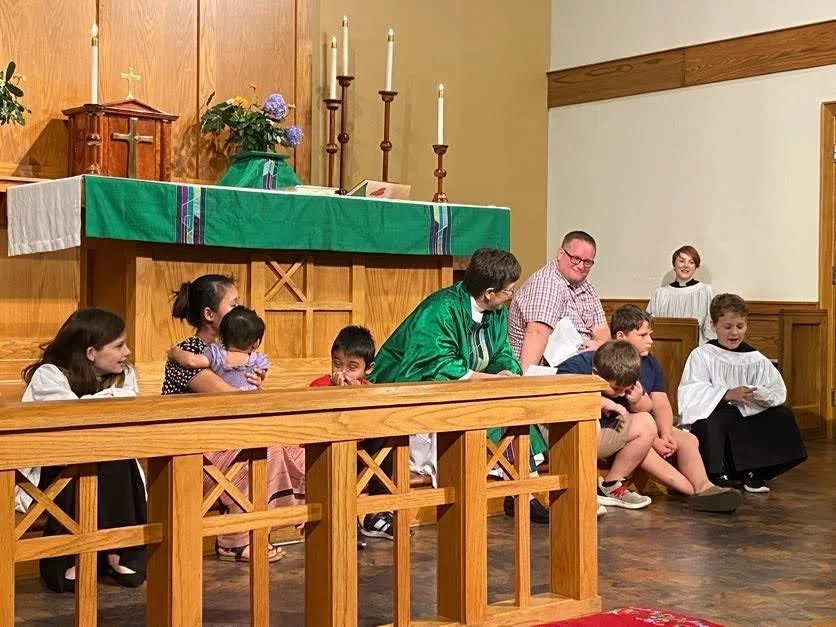
All are welcome at Christ's Table
Wherever you are on your journey of faith, all are welcome to receive communion at All Saints’. We believe that God dwells within each one of us and that God is present with us as we gather together in God’s name. You are a part of God’s presence here, and we look forward to having you join us in making that presence known here and in our community. No matter where you are on your journey, our welcome knows no boundaries.
Our All Saints' community includes people of diverse ages, races, ethnicities, gender identities, sexual orientations, family make-up, marital status, personal and religious history, levels of education, physical and mental abilities, stages of recovery, financial realities, and political persuasions. We celebrate our differences and strive to affirm the dignity of every human being. We believe that all Creation is inherently good, and so are you!
What to Expect during Services
-
Rites
Episcopal services are designated as Rite I or Rite II. At All Saints’, our Rite I service is held at 8:00am on Sundays, and our Rite II service is held at 10:30am Sundays.
While the format of the services are essentially the same, Rite I uses more traditional language and Rite II uses more contemporary language.
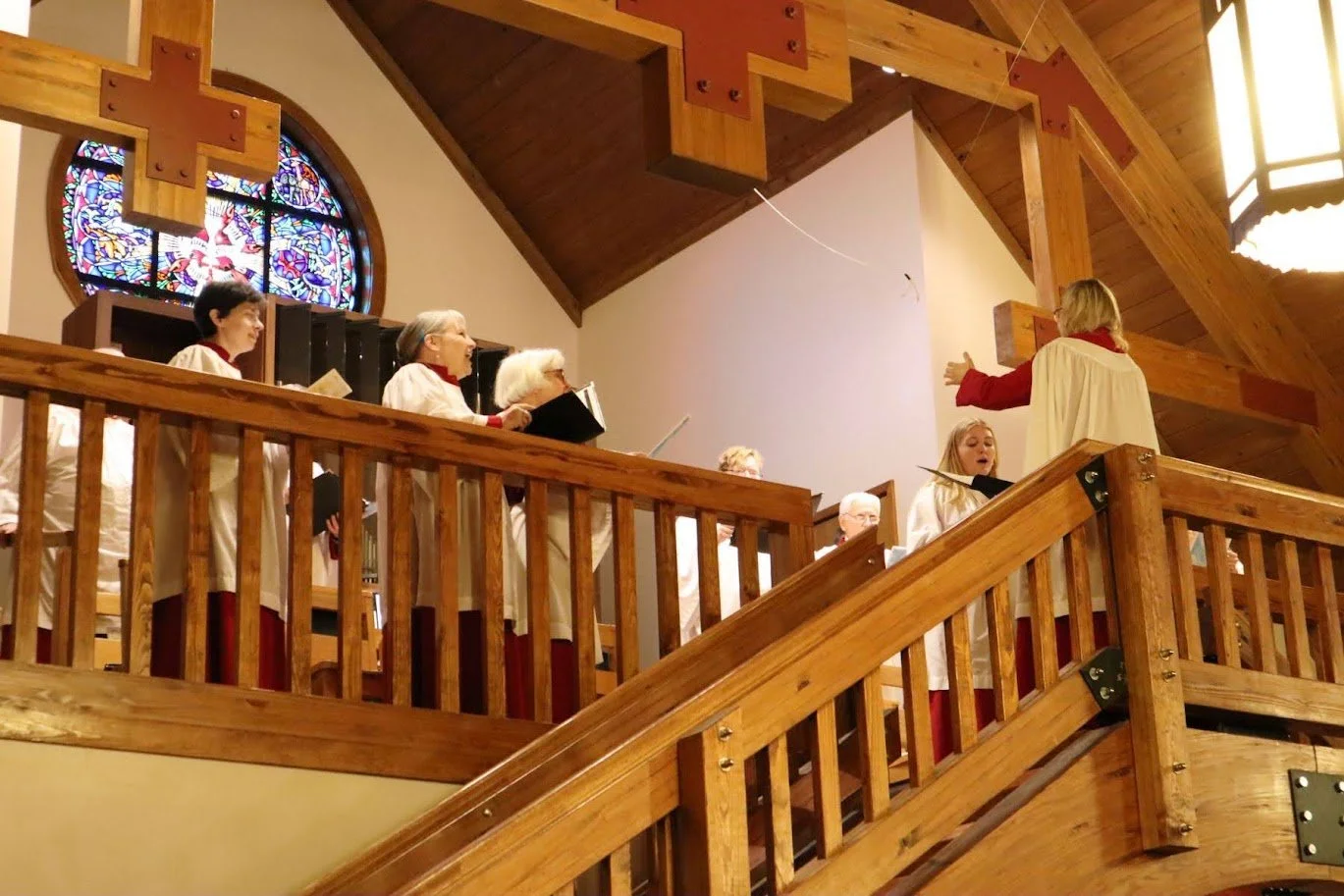
At All Saints’, our Rite I service is spoken only, whereas the Rite II service features choral music.
We encourage all newcomers to experience both services to determine if one or the other is preferential; of course all are welcome to attend both!
Read more about the differences between Rites I and II in the official Episcopal Church glossary.
-

Episcopalian Worship
Episcopalians worship in many different styles, ranging from very formal, with vestments and incense, to informal services with contemporary music; yet all worship in the Episcopal Church is based in the Book of Common Prayer, which gives worship a familiar feel, no matter where you go.
Worship in the Episcopal Church is liturgical. The congregation follows a standard format that changes little from week-to-week. This gives worship a rhythm that becomes comfortable and familiar to worshipers.
For the first-time visitor, liturgy may be exhilarating or confusing. Services may involve standing, sitting, kneeling, as well as sung or spoken responses, that may overwhelm a newcomer.
If you are ever unsure, simply participate in whatever way feels comfortable for you. There is no judgment and there are no expectations. -

Eucharist
In the Episcopal Church, the entire service is referred to as the Holy Eucharist. The actual taking of bread and wine is the central focus of the service.
The priest stands at the altar, which has been set with a cup of wine and a plate of bread or wafers, and begins the Eucharistic Prayer. The priest blesses the bread and wine, and the congregation recites the Lord’s Prayer. The bread is broken and offered to the congregation, as the “gifts of God for the People of God.”The wine used for the service is watered down; however, if you would like to receive the bread but not the wine, you may cross your hands over your chest as the cup passes. If you do not wish to receive communion you may still come forward for a blessing by kneeling at the altar and crossing your hands in front of your chest.
All are welcome to partake in communion, no exceptions.
Frequently Asked Questions
-
No. Wherever you are on your journey of faith, all are welcome to receive communion. If you would like to receive the bread but not the wine, you may cross your hands over your chest as the cup passes. If you do not wish to receive communion, you may still come forward for a blessing. Crossing your hands over your chest lets us know you wish to receive a blessing.
-
Children of all ages are welcome to participate during the service. We do offer a nursery on Sundays from 9:00am through 1:00pm for children five and under. We also offer a rocking chair in the back of the church for guardians or parents of small children, as well as a family room just off our sanctuary for those who need a quiet space or place with their families. Children are invited to fully participate in our services. We love the sound of children in church!
-
All Saints’ and the Episcopal Church as a whole affirms and welcomes all members the LGBTQ+ community. The All Saints’ community includes members of a range of gender identities and sexual orientations. All people are welcome as members of the Episcopal Church at all levels of leadership, lay and ordained. Read more here.
-
We invite you and your family to attend in whatever you feel most comfortable and appropriate. We have worshipers who attend in everything from comfortable loungewear to “Sunday best.”
-
You are welcome to participate at whatever level you feel comfortable or able. Our style of worship is an active engagement, when able people may stand or kneel or sit down for God. The rule of thumb for standing is that we stand to praise the Lord. Normally we sit when instructed. When in doubt about proper etiquette, don’t be afraid to ask someone next to you. Most likely this person was new once and initially felt just as confused by all the physical activity in the pews. And if you prefer to remain seated during the entire service, that is fine as well!